Blog

Wheel of Life

Directions: The nine sections in the Wheel of Life represent different aspects of your life. Seeing the center of the wheel as least satisfied and the outer edge as most satisfied, rank your level of satisfaction with each life area by drawing a straight or curved line to create a new outer edge. The new perimeter represents the wheel of your life. If this were a real wheel, how bumpy would the ride be?

Goals

  1. Write down a specific goal.
  2. Write down the feeling you would have if you accomplish the goal.
  3. What is the timeframe you need to achieve your goal?
  4. Action. What can you do to get closer to the goal?

Voice of Judgement (Why you can’t achieve goal)

Voice of Wisdom (Who you are at your best. What your fairy godmother would tell you.)

Download the printable worksheet

Mental Zen Weekly Digest: Embracing Impermanence

Commentary on a piece by Mike Oppland

I have heard from many of you how current events are impacting your stress levels. One thing to keep in mind is what this time can look like in the big picture of history. We are a blip. In the historical timeline above, we are not even visible in the timeline of humanity. This is not to minimize the impact of our current climate in any way. It is rather to have perspective of how humanity keeps going, in spite of the dictators, in spite of the disasters, in spite of wars, in spite of everything. This week’s article focuses on impermanence and how “we each have the capacity to enjoy our lives completely as long as we understand that negative situations are unavoidable and none of our experiences last forever”. Whatever lies ahead, it is not forever.

Historical timeline of humanity

“Moments come and go. Days pass by, turning into weeks, then months, then years. You and the life you lead are constantly changing. Nothing is permanent.

It is beneficial to remind yourself of this as you confront adversity and as negative emotions become overwhelming. At some point, nearly all of us experience grief resulting from the loss of a loved one.

Many of us will be in states of sadness, pain, and anguish over a breakup or a termination of a job. And a number of us will become the unfortunate victims of crimes or wrongdoings.

Considering these possibilities doesn’t have to be morbid or morose. There’s no denying that each of us will experience challenges to our well-being over which we have no control. If we are able to face these situations knowing that nothing is permanent, then we are more likely to appropriately handle and overcome them.

Awareness of impermanence and appreciation of our human potential will give us a sense of urgency that we must use every precious moment. ~Dalai Lama

Just as negative occurrences are not permanent, neither are positive ones. Realizing this is important to constructing a balanced perspective. Becoming aware of the impermanence of all situations can fuel one’s passion for relishing and savoring the wonderful parts of life.

Rather than viewing these situations as inevitable, one can begin to see them as the precious gifts that they are.

Accepting Impermanence Helps Cultivate Positive Well-Being

While clinical psychology has largely focused on diagnosing and treating mental illness and diseases, positive psychology is concerned with cultivating positive well-being, not merely eliminating negative mental states.

A 2006 study examined how Buddhist traditions and modern Western ideologies could be combined to attain mental balance (Wallace & Shapiro, 2006). This desired mental balance is predicated on the idea of impermanence, a foundational Buddhist concept. Living with balanced mental states that are founded in impermanence counteracts the negative cycles of rumination that cause many people to suffer. It’s one reason why Buddhist ideas have made their way into mainstream Western culture: All people seek to live with a calm and relaxed mind.

Cope More Easily With Trying Times

Research in the field of positive psychology suggests that external factors don’t determine one’s happiness. Certainly, positive external factors compound and complement one’s overall contentment, but internal factors are required to achieve an authentically joyous life.

Genuine happiness comes from within, and it can be cultivated through mindfulness meditation and other activities, including gratitude journaling, awe journaling, and focusing on the good.

In difficult times, people are often unhappy because they lost some of the external things to which they have attachments. In some cases, even the mere threat of losing an external element is enough to raise negative emotions.

Impermanence allows people to cope more easily with trying times. If someone comes to the conclusion that life is not permanent, and neither is anything in it (like one’s partner, children, job, physical capabilities, financial and social status), then one is more likely to react gracefully when something perceived as valuable is taken away (LaBier, 2012).

You Can’t Force Happiness

According to Buddhism, attachment is the root of suffering, and it is usually the reason why impermanence is difficult to fathom for many people. Rationally accepting that everyone and everything is temporary is a refreshing concept, and whether you want to believe it or not, it’s true.

It is also important to understand that grasping for positive thoughts, emotions, and occurrences in life is not what positive psychology suggests. If you accept the notion of impermanence but still attempt to force happiness and joy into your life, you are missing the point.

We each have the capacity to enjoy our lives completely as long as we understand that negative situations are unavoidable and none of our experiences last forever. Everything in your life, including yourself, has an expiration date.

This quote from Paul T.P. Wong (2007), a positive psychologist specializing in Chinese traditions, beautifully sums up the concept of impermanence. It is excerpted from a paper he wrote outlining the differences between positive psychology in America and China:

“Craving for happiness necessarily causes us to fear or reject anything that causes unhappiness or pain. Attachment to possession and achievement invariably leads to disappointment and disillusionment, because everything is impermanent. Thus, the positive psychology of pursuing positive experiences and avoiding negative experiences is counterproductive, because the very focus on happiness contains the seed of unhappiness and suffering. Failure to embrace life’s experience in its entirety is at the root of suffering.”

Mike Oppland, BA, MBA, Author, is a teacher and basketball coach with a passion for positive psychology. Article taken from PositivePsychology.com

Pelicans in flight

Wishing you a zen week ahead.

Warmly,

Claudine

Mental Zen Choices

I have spoken to many of you about a book called, “The Choice” by Dr. Edith Eger. For those who are in the process of reading it or plan to read it, you may want to skip this newsletter. This is for all the people who requested the “Cliff Notes” version of the book! It’s amazing how Dr. Eger can offer so much hope while describing such darkness and horror, yet she does just that. This seemed fitting as we are coming out of a dark winter, and finding the gems of spring and hope around us.

In the excerpts below, I share some of the hopeful gems from Dr. Eger’s book. There are many, so I encourage you to read a few, reflect, and then come back and read a few more, rather than plow through the whole thing in one sitting. There are valuable and sage words which I think many people can find helpful in their own work.

Excerpts by Edith Eger:

Even the dullest moments of our lives are opportunities to experience hope, buoyancy, happiness. Mundane life is life too. As is painful life, and stressful life. Why do we so often struggle to feel alive, or distance ourselves from feeling life fully? Why is it such a challenge to bring life to life?

Suffering is universal, but victimhood is optional. There is a difference between victimization and victimhood. We are all likely to be victimized in some way in the course of our lives. At some point we will suffer some kind of affliction or calamity or abuse, caused by circumstances or people or institutions over which we have little or no control. This is life. And this is victimization. It comes from the outside. It’s the neighborhood bully, the boss who rages, the spouse who hits, the lover who cheats, the discriminatory law, the accident that lands you in the hospital. In contrast, victimhood comes from the inside. No one can make you a victim but you. We become victims not because of what happens to us but when we choose to hold on to our victimization. We develop a victim’s mind—a way of thinking and being that is rigid, blaming, pessimistic, stuck in the past, unforgiving, punitive, and without healthy limits or boundaries. We become our own jailors when we choose the confines of the victim’s mind.

There is no hierarchy of suffering. By saying, “things in my life are pretty hard right now, but I have no right to complain—it’s not Auschwitz.” This kind of comparison can lead us to minimize or diminish our own suffering. Being a survivor, being a “thriver” requires absolute acceptance of what was and what is. If we discount our pain, or punish ourselves for feeling lost or isolated or scared about the challenges in our lives, however insignificant these challenges may seem to someone else, then we’re still choosing to be victims. We’re not seeing our choices. We’re judging ourselves.

Often, the little upsets in our lives are emblematic of the larger losses; the seemingly insignificant worries are representative of greater pain.

Not: Why did I live? But: What is mine to do with the life I’ve been given?

We don’t know what’s going to happen. Just remember, no one can take away from you what you’ve put in your mind.

If this moment, this very one, is my last on Earth, do I have to waste it in resignation and defeat? Must I spend it as if I’m already dead?

There is power in our laughter.

I now object to pathologizing post-traumatic stress by calling it a disorder. It’s not a disordered reaction to trauma—it’s a common and natural one. I wasn’t a damaged person, that I was suffering the fallout of an interrupted life.

Running away doesn’t heal pain. It makes the pain worse.

My daughter is also living two lives—the one she lives for herself and the one she lives for me because I wasn’t allowed to live it.

At the very heart of Victor Frankl’s teaching: Everything can be taken from a man but one thing: the last of the human freedoms—to choose one’s attitude in any given set of circumstances, to choose one’s own way. Each moment is a choice. No matter how frustrating or boring or constraining or painful or oppressive our experience, we can always choose how we respond. And I finally begin to understand that I, too, have a choice. This realization will change my life.

Now that I have faced myself a little more fully, I can see that the emptiness I felt in our marriage wasn’t a sign of something wrong in our relationship, it was the void I carry with me, even now, the void that no man or achievement will ever fill. Nothing will ever make up for the loss of my parents and childhood. And no one else is responsible for my freedom. I am.

The truth is, we will have unpleasant experiences in our lives, we will make mistakes, we won’t always get what we want. This is part of being human. The problem—and the foundation of our persistent suffering—is the belief that discomfort, mistakes, disappointment signal something about our worth. The belief that the unpleasant things in our lives are all we deserve.

Perfectionism emerged in my childhood as a behavior to satisfy my need for approval, and it became an even more embedded coping mechanism for dealing with my survivor’s guilt. Perfectionism is the belief that something is broken—you. So you dress up your brokenness with degrees, achievements, accolades, pieces of paper, none of which can fix what you think you are fixing. In trying to combat my low self-esteem, I was actually reinforcing my sense of unworthiness. In learning to offer my patients total love and acceptance, I fortunately learned the importance of offering the same to myself.

Once patients can see why they developed a certain behavior (belittling others, attaching oneself to angry people, eating too little, eating too much, etc.), they can take responsibility for whether or not they maintain the behavior. They can choose what to give up (the need for approval, the need to go shopping, the need to be perfect, etc.)—because even freedom doesn’t come for free! And they can learn to take better care of themselves and to discover self-acceptance: Only I can do what I can do the way I can do it.

Richard Farson’s calamity theory of growth, which says: Very often it is the crisis situation … that actually improves us as human beings. Paradoxically, while these incidents can sometimes ruin people, they are usually growth experiences. As a result of such calamities the person often makes a major reassessment of his life situation and changes it in ways that reflect a deeper understanding of his own capabilities, values, and goals.

You can live to avenge the past, or you can live to enrich the present. You can live in the prison of the past, or you can let the past be the springboard that helps you reach the life you want now.

Despite—and, really, because of—the struggles and the tragedies in our lives, each of us has the capacity to gain the perspective that transforms us from victim to thriver. We can choose to take responsibility for our hardships and our healing.

Feelings, no matter how powerful, aren’t fatal. And they are temporary. Suppressing the feelings only makes it harder to let them go. Expression is the opposite of depression.

Anger, however consuming, is never the most important emotion. It is only the very outer edge, the thinly exposed top layer of a much deeper feeling. And the real feeling that’s disguised by the mask of anger is usually fear. And you can’t feel love and fear at the same time.

This is the work of healing. You deny what hurts, what you fear. You avoid it at all costs. Then you find a way to welcome and embrace what you’re most afraid of. And then you can finally let it go.

Overcome? I haven’t overcome anything. The past isn’t gone. It isn’t transcended or excised. It lives on in me. But so does the perspective it has afforded me: that I lived to see liberation because I kept hope alive in my heart. That I lived to see freedom because I learned to forgive.

To forgive is to grieve—for what happened, for what didn’t happen—and to give up the need for a different past.

The hardest person to forgive is someone I’ve still to confront: myself.

But to save yourself, you are going to have to give up the image of who you think you’re supposed to be.

I can make the choice that all of us can make. I can’t ever change the past. But there is a life I can save: It is mine. The one I am living right now, this precious moment.

Our painful experiences aren’t a liability—they’re a gift. They give us perspective and meaning, an opportunity to find our unique purpose and our strength.

The biggest prison is in your own mind, and in your pocket you already hold the key: the willingness to take absolute responsibility for your life; the willingness to risk; the willingness to release yourself from judgment and reclaim your innocence, accepting and loving yourself for who you really are—human, imperfect, and whole.

I used to ask, Why me? Why did I survive? I have learned to ask a different question: Why not me?

I can’t heal you—or anyone—but I can celebrate your choice to dismantle the prison in your mind, brick by brick. You can’t change what happened, you can’t change what you did or what was done to you. But you can choose how you live now.

Eger believes that we are not dishonoring the dead by living our lives to the fullest. Indeed, what better way to honor them by growing and thriving? We cannot change what happened to us but we can decide how we want to live the rest of our lives.

Edith Eva (Edie) Eger (Kosice, September 29, 1927) is an American psychologist. She is a Holocaust survivor and a specialist in the treatment of post-traumatic stress disorder. Her memoirs entitled The Choice-Embrace the Possible became an international bestseller.

Wishing you a zen week ahead.

Warmly, Claudine

Mental Zen: Upside to Fear

Article by Ethan Nichtern

Author Ethan Nichtern captures the climate well in his description of fear felt among many right now. He also elaborates on the benefits of this feeling and how it serves us. We often talk about anxiety during our sessions and various tools to quell this feeling, though it’s also worth recognizing the value of just sitting with this feeling and observing it with equanimity.

“Almost everyone I know is experiencing heightened fear right now, with Covid-19, the upcoming election, greater national attention to systemic racism and police brutality, and tremendous uncertainty about the future. Fear, however, has profound wisdom within it. Here are three ways that might show up in our lives.

1. Compassion

First, we can have great compassion toward our fears, and the fears of others.

Our human nervous systems evolved from those of species whose very survival was threatened constantly, and who passed on their reptilian and animal brains to us. It makes sense that being afraid that you might not make your rent payment this month can provoke almost the same nervous response as thinking that a predator is about to eat you. Inhabiting a human nervous system is kind of like living in a house where the doorbell and the burglar alarm make exactly the same sound.

So when we experience fear, no matter how irrational it may seem, we can use it as an occasion to remember what unites all human beings together, and to hold that with compassion for ourselves and others.

2. Real Fearlessness

Second, as we confront our fears over and over again, both in meditation and in everyday life, we gradually learn that true fearlessness is about moving toward fear, not away from it.

True “fearlessness” is not some idealized state where the emotion no longer occurs. In fact, idealizing some imagined state actually makes fear worse, as we can become terrified of being with the emotions and thoughts that move through our minds moment by moment.

Rather, true fearlessness means to see fear as a profound emotion, and move toward it as a sacred experience that links us with every other human who has felt terrified at one time or another. This courageous act of moving toward fear, rather than trying to reject it, is, ironically, what we call fearlessness.

3. Growing More Alive

Third, moving toward fear in this way can help us grow more authentically alive.

As the Tibetan Buddhist teacher Pema Chodron has said, “Fear is a natural reaction to moving closer to the truth.” Connecting with fear, we get up close and personal with the vulnerability and fragility of being a human being. When we take a sacred approach to fear, we begin to resensitize and overcome our numbness. Fear becomes a motivation to open up, to be a brave and flawed person among other flawed people. Working with fear forms the basis for accommodating every other difficult emotion.

A person facing her fear models a kind of authentic realness. The energetic quality of fear is no different from the energy of being alive— fear runs through our veins and our nervous system as our most basic power source.

Fear, when we can face it, grounds us in our body and annihilates the pretense that we are supposed to be anywhere else. Fear destroys the naive spiritual premise that we might “transcend” our human experience, and encourages us to be right here. When we accommodate fear, we just show up, perhaps shaking a little, but good enough to be worthy of what is in front of us.

Fear is saying to us, “This is really happening. You are really alive right now. These jitters you feel are the basic life force of your heart and mind, your wind horse. Please stop wishing for another now!”

This approach to fear as the most fundamental emotion connecting us to our humanity still does not mean we have to seek it out. We don’t need to go looking for fear— we just need to work bravely with whatever fear we naturally experience.

Speaking personally, I experience fear so many times each day that I can’t even keep track. Fear is always with us, yet if we can take a friendly approach to viewing it as a valid and meaningful experience, it becomes a recurring energy that shows us our own beating heart, and shows us that we are alive and awake.

The full experience of fear is a prelude to every moment of growth along our journey. Fear is the most sacred emotion of all.”

Ethan Nichtern is a senior Buddhist teacher. From 2010-2018 he served as the teacher in residence for the Shambhala NYC community. He is the author of The Road Home: A Contemporary Exploration of the Buddhist Path (2015), The Dharma of The Princess Bride (2017) and other books.

Wishing you a zen week ahead.

Warmly, Claudine

Mental Zen: Ambiguous Loss

Article by Lindsay Taylor and Pauline Boss

At various times, I have heard from many of you how wearisome dealing with this era of uncertainty has become. The fatigue often waxes and wanes, hits some seemingly out of the blue, or builds on itself like a mounting wave. As a society, we have experienced an ambiguous loss, and this is the sadness many of us harbor at times. As you will see, that’s ok. You can feel the losses of the life we knew, and understand that we must have those losses, for now, to be safe. This week’s article is a little long, so if you’re in a hurry, just scroll down to the last paragraph about ‘Grief in the time of COVID’. While it was written during the pandemic, it is still applicable to many forms of loss. Check it out.

“Therapist and professor Pauline Boss coined the term “ambiguous loss” to describe unique types of losses for which there is no closure. Prototypical examples are when a loved one goes missing and is never heard from again, or a parent or partner develops Alzheimer’s disease and slowly ceases to be the person you once knew despite being physically present.

Because these fall outside the realm of “typical loss,” the folks left behind experience more enduring and more complicated grief. Most of us are prepared to deal with losses that are concrete and finite. We have rituals—burials, commemorative tattoos—that help us mark the end of a chapter. When loss is ambiguous, there are no such rituals and no finality. People around us are often ill-equipped to help. They may be confused or put off by the intensity of our grief. They might even regard it as inappropriate or unfounded. It can be tremendously isolating.

It’s no wonder that Dr. Boss asserts that ambiguous loss is the most traumatic and hardest type of loss to face. Ambiguous losses violate our sense of control, certainty, and justice. They shake our identities and disrupt our relationships with other people.

Still, in almost five decades of working with people who have suffered ambiguous losses, she and others have identified concrete steps to help people cope with, and live well after, experiencing ambiguous loss.

What Types of Situations Create Ambiguous Loss?

As a family therapist, Dr. Boss’s work has mainly focused on two types of situations having to do with the loss of loved ones. In the first, the person is physically gone, but without a (confirmed) death. They are not here but not gone either.

What these have in common is relationship. The relationship you once had has been severed, and there is no guarantee (or no realistic chance) it will ever return to normal.

Researchers and practitioners use the ambiguous loss framework to understand other types of situations as well. The experience of loss is entirely subjective. Any time a loss feels complicated or unresolvable, or you believe others won’t acknowledge the depth of your loss, you might experience it as ambiguous. Homesickness might manifest as mild sadness or deep grief. Divorce devastates some and comes as a welcome relief for others.

Even deaths can trigger ambiguous loss if you feel you can’t grieve freely because:

  • You weren’t close to the person by societal standards (e.g., employee, social media friend)
  • Your relationship was illicit or taboo (e.g., former lover)
  • The nature of the death might elicit shaming or judgment from others (e.g., driving drunk, suicide)

Unique Challenges of Grieving an Ambiguous Loss

Psychologically, humans are wired for certainty. We want to control and master our environments. To that end, we need to see the world as fair and just. Ambiguous losses topple those illusions. Not only do people have to deal with the losses themselves, but also the shattering of their worldview.

Coping with Ambiguous Loss

Boss suggests that ambiguous loss, and the complicated grief that it causes, are the hardest losses to cope with. She describes the grief process as “frozen” because the usual advice—find closure—doesn’t apply to these situations. People feel like failures because they can’t “get over” their feelings, when really the problem isn’t the persistent grief. It’s the lack of understanding and social support for the grieving person.

Rather than finding closure and moving on, the goal with ambiguous loss is to find a way to live with the ambiguity, develop resilience in lieu of closure, and continue to live a meaningful life despite the sadness.

Concrete Steps You Can Take

When Boss works with someone who is experiencing ambiguous loss, her first step is to name and validate the person’s experience: “What you are experiencing is an ambiguous loss, the most difficult kind of loss because there is no closure.” Simply naming the experience often provides relief, as the person sees that their feelings are real and understandable. You can offer yourself this validation. Give yourself permission to feel your feelings without worrying about whether they are okay, too much, or too prolonged.

Find Support

Ideally, you’d be able to rely on friends and family for emotional support, but that may not be the case. Either way, there are other people out there who have had experiences similar to yours. They will be there for you if you seek them out.

You may choose to find a therapist as well. However, Boss stresses that it’s important not to pathologize your grief. In other words, don’t assume something is wrong with you because you’re grieving. Your feelings are legitimate reactions to painful, sometimes horrific, events. If you want someone to talk to, a therapist can be a great option. If you are unable to function or are thinking about self-harm, definitely seek help.

However, friends, family, even therapists shouldn’t push you to “get better,” nor expect your grief be what they consider normal. (This is itself unfair, as no two experiences of grief are identical.) Look for a therapist who has experience with ambiguous loss.

Work on Both/And Thinking

This is also known as dialectical thinking—allowing the mind to hold two contradictory, even seemingly incompatible, beliefs simultaneously. Some cultures are more comfortable with this than others. Americans tend not to be great at it.

Consciously work on accepting this new way of thinking. For example, you might practice telling yourself:

  • “My partner no longer remembers me, and he is still the person I married.”
  • “I no longer live there, and that country is still my home.”
  • “I’ve never met my biological parents, and I still miss them.”

Find Meaning

This doesn’t necessarily mean you have to find meaning in the situation that causes you pain, although it’s great if you can. Rather, you look for ways to continue to live a life that includes purpose and even joy despite the pain. There’s a reason so many people who have lived through trauma go on to help other victims—it provides a sense of purpose. You might find meaning in your work, exercise, a spiritual practice, or a hobby.

These types of activities can also help you reassert your sense of mastery. As you devote your time and energy to a pursuit, you shape the outcome and control a piece of your world once more.

Create Your Own Ritual

If you couldn’t have, or weren’t able to attend, a memorial for someone lost or deceased, do something on your own. It need not be big as long as it feels meaningful to you.

In cases of not-here-but-not-gone losses, people grieve the loss of traditions like family holidays, trips to the summer cabin, or even having nightly dinners together. Ask yourself what types of new rituals you can create that fit your new circumstances. This is another way to find meaning in your present reality, too.

Grief in the Time of COVID

At the beginning of COVID I wrote that we were individually and collectively experiencing ambiguous loss. That remains as true as ever. Children and parents lost the end of one school year and the beginning of another. You might be grieving for milestones you couldn’t celebrate, lost jobs, loved ones, travel, or simply the world as we knew it in the distant past of January.

It seems to me that many people are either downplaying or unaware of how much the stress and angst of living in 2020 is affecting them. If you’re reading this and coming to see your experience through the lens of ambiguous loss, the same coping tools apply here. Start by acknowledging and validating your experiencing of ambiguous loss. Your feelings are understandable reactions to unfathomable circumstances. Work on finding support where you can and finding new ways to find meaning and control. Practice both/and thinking: “I want to eat out in restaurants, and I understand why they are closed right now.” “I want my kids to have a normal school year, and I know that’s not possible.”

I can’t stress enough that there is no playbook for grief. As I said, the experiences of loss and grief are intensely personal. The goal is to practice self-awareness and self-acceptance so that whatever your situation, you can address it.”

Lindsay Taylor, Ph.D., is a senior writer and community manager for Primal Nutrition, a certified Primal Health Coach.

Pauline Boss is an educator and researcher who is widely recognized for her groundbreaking research on what is now known as the theory of ambiguous loss. Dr. Boss is known as a pioneer in the interdisciplinary study of family stress.

Wishing you a zen week ahead.

Warmly, Claudine

Mental Zen: 1918 Didn’t Last Forever

Articles from Healthline and Sarah Oliges

Like the fables go, it’s good to be the one who prepares for winter in advance. I read an article that referred to this coming winter as “Dickinsonian” if things continue to progress on the route we’re currently on. While I encourage you to fully enjoy and be present for the last weeks of summer, I would also encourage you to think ahead in terms of what you can do to help yourself through a potentially dark winter. Some suggestions are below. Additionally, I think keeping in mind that this is temporary is paramount. 1918 didn’t last forever, and neither will this year! This strange time will end. Let this be your mantra. (Did you notice the cat is also wearing a mask in the above image? They also had a sense of humor in 1918, which incidentally, is a big source of resilience.)

So what can you do to prepare? Many people have found it helpful to be outside and socialize with friends and family. When the days get shorter and darker, there things you can do to make the dark space more tolerable. A full-spectrum light to help with SAD (seasonal affective disorder) or just a warm work light if you don’t like the harsh white of the “light box”. Vitamin D to help with the lack of sunshine. (Note: a lightbox does not provide vitamin D.) Perhaps something fun and novel, like a class you’ve always been curious about, or researching travel to a new place.

Below, you’ll find articles about the importance of Vitamin D and how light boxes can be helpful during the coming months. You can plan ahead, while also being mindful to enjoy as much outdoor time now as possible.

“Above a certain latitude (such as in Boston) during the winter months (mid-October to mid-March), the sun is at such a low angle in the sky that the atmosphere filters out the rays that help make vitamin D.

What does vitamin D do?

Vitamin D, also known as choleciferol, is a prohormone produced in the body with the help of UVB rays from the sun. Vitamin D plays a critical role in the absorption of calcium in the small intestine and in the regulation of calcium in the blood. According to a recent article in the Tufts Nutrition News, vitamin D plays other important roles in the body. Though the evidence is still emerging, in addition to mediating immunity and mood, vitamin D deficiency may be linked to heart disease and cancer.

Where do I get vitamin D?

Sunlight is the best “source” of vitamin D. Our skin uses UVB rays to make vitamin D from cholesterol. The UVB rays from the sun are most available in the middle hours of the day during the summer months. It takes anywhere from 5-60 minutes to get adequate UVB exposure, depending on skin tone (darker takes longer) and the UV Index (the UV index is generally given with the weather report). If the UV index is under three, there are no UVB rays. The higher the UV index gets above three, the less sunlight you need to make enough vitamin D.

It sounds simple enough, but the problem for New England dwellers is that in the northern latitudes, the sun’s angle in the sky prevents UVB rays from penetrating the atmosphere at all in the winter, and the UV Index is perpetually below three. Even at latitudes farther south, because of winter clothing and shorter days, people are still at risk of not getting enough sun exposure to make adequate amounts of vitamin D. With mounting evidence suggesting that vitamin D plays a critical role in many processes in the body (including warding off the flu!) it is advisable to seek out alternative sources during the winter.

Unfortunately, there are not many natural food sources of vitamin D. Animal foods contain small amounts and some foods such as cereals and milk, may be fortified. Fatty fish such as cod or tuna are also sources of vitamin D. Because the sources are few and far between, a supplement may be the best way to obtain vitamin D in the winter.”

How to use a SAD lamp for seasonal affective disorder

“Don’t start using a SAD lamp without your doctor’s approval. This is especially important if you have a diagnosis such as bipolar disorder, glaucoma, or lupus.

Use the lamp daily until daylight hours increase.

Experiment with time frame. Many people find benefits from as little as 20 minutes of use. Others require 60 minutes, which is typically considered the highest exposure you should get.

Consider when and how often you use it. Many experts recommend using a SAD lamp first thing in the morning. Your doctor might also recommend that you use it during the day. Keep in mind that more is not always better. Overuse of a SAD lamp can produce insomnia or other side effects.

Follow manufacturer recommendations for position. Your lamp should come with recommendations for how close you should position yourself to it. This is very important, as your distance from it will impact the lamp’s lux capacity.

Position the lamp so that it’s providing you with downward light that doesn’t shine directly into your eyes.

The lamp shouldn’t be positioned directly in front of you, but rather, at an angle. This will also protect your eyes.

Talk to your doctor about how to best stop using the lamp. It may be most appropriate for you to wean yourself off slowly. Spending time outdoors, especially in the mornings, can help this process.

How a SAD lamp helps treat seasonal affective disorder

SAD lamps simulate sunlight. This helps trigger the brain to release serotonin, which is often called the feel-good hormone.

During periods when daylight hours are short, studies show that using light therapy can help to adjust your circadian rhythm, the body’s process for regulating your sleep-wake cycle. This is beneficial for evening out mood and reducing depression.”

Healthline also provides a review of the best light boxes if you are interested in getting one. They range in price from $30 to $200, depending on aesthetics and size.

“Vitamin D: Use it to Ward Off the Winter Blues and Flues” by Sarah Oliges

“SAD Lamps for Seasonal Affective Disorder and How to Use Them” Medically reviewed by Debra Sullivan, Ph.D., MSN, R.N., CNE, COI

Wishing you a zen week ahead.

Warmly, Claudine

Mental Zen: “Tap” into Peace

An article from Healthline

This article is an introduction to (or reminder to use) Tapping, also known as Emotional Freedom Technique (EFT). It is always good to have many tools in your toolbox, and tapping can be one of them. Many people I have worked with have used Tapping and found it to be very helpful- give it a try if you haven’t already! There are many articles on Tapping, and this one comes from Healthline giving a brief overview. If you would like further information, you can do an online search for further articles and/or videos demonstrating this technique since it may be difficult to follow/understand the steps by just reading about them.

What is EFT tapping?

Emotional freedom technique (EFT) is an alternative treatment for physical pain and emotional distress. It’s also referred to as tapping or psychological acupressure.

People who use this technique believe tapping the body can create a balance in your energy system and treat pain. According to its developer, Gary Craig, a disruption in energy is the cause of all negative emotions and pain.

Though still being researched, EFT tapping has been used to treat people with anxiety and people with post-traumatic stress disorder (PTSD).

How does EFT tapping work?

Similar to acupuncture, EFT focuses on the meridian points — or energy hot spots — to restore balance to your body’s energy. It’s believed that restoring this energy balance can relieve symptoms a negative experience or emotion may have caused.

Based on Chinese medicine, meridian points are thought of as areas of the body energy flows through. These pathways help balance energy flow to maintain your health. Any imbalance can influence disease or sickness.

Acupuncture uses needles to apply pressure to these energy points. EFT uses fingertip tapping to apply pressure.

Proponents say the tapping helps you access your body’s energy and send signals to the part of the brain that controls stress. They claim that stimulating the meridian points through EFT tapping can reduce the stress or negative emotion you feel from your issue, ultimately restoring balance to your disrupted energy.

EFT tapping in 5 steps

EFT tapping can be divided into five steps. If you have more than one issue or fear, you can repeat this sequence to address it and reduce or eliminate the intensity of your negative feeling.

1. Identify the issue

In order for this technique to be effective, you must first identify the issue or fear you have. This will be your focal point while you’re tapping. Focusing on only one problem at a time is purported to enhance your outcome.

2. Test the initial intensity

After you identify your problem area, you need to set a benchmark level of intensity. The intensity level is rated on a scale from 0 to 10, with 10 being the worst or most difficult. The scale assesses the emotional or physical pain and discomfort you feel from your focal issue.

Establishing a benchmark helps you monitor your progress after performing a complete EFT sequence. If your initial intensity was 10 prior to tapping and ended at 5, you’d have accomplished a 50 percent improvement level.

3. The setup

Prior to tapping, you need to establish a phrase that explains what you’re trying to address. It must focus on two main goals: acknowledging the issues, and accepting yourself despite the problem.

The common setup phrase is: “Even though I have this [fear or problem], I deeply and completely accept myself.”

You can alter this phrase so that it fits your problem, but it must not address someone else’s. For example, you can’t say, “Even though my mother is sick, I deeply and completely accept myself.” You have to focus on how the problem makes you feel in order to relieve the distress it causes. It’s better to address this situation by saying, “Even though I’m sad my mother is sick, I deeply and completely accept myself.”

4. EFT tapping sequence

The EFT tapping sequence is the methodic tapping on the ends of nine meridian points.

There are 12 major meridians that mirror each side of the body and correspond to an internal organ. However, EFT mainly focuses on these nine:

  • karate chop (KC): small intestine meridian
  • top of head (TH): governing vessel
  • eyebrow (EB): bladder meridian
  • side of the eye (SE): gallbladder meridian
  • under the eye (UE): stomach meridian
  • under the nose (UN): governing vessel
  • chin (Ch): central vessel
  • beginning of the collarbone (CB): kidney meridian
  • under the arm (UA): spleen meridian

Begin by tapping the karate chop point while simultaneously reciting your setup phrase three times. Then, tap each following point seven times, moving down the body in this ascending order: eyebrow, side of the eye, under the eye, under the nose, chin, beginning of the collarbone, under the arm.

After tapping the underarm point, finish the sequence at the top of the head point.

While tapping the ascending points, recite a reminder phrase to maintain focus on your problem area. If your setup phrase is, “Even though I’m sad my mother is sick, I deeply and completely accept myself,” your reminder phrase can be, “The sadness I feel that my mother is sick.” Recite this phrase at each tapping point. Repeat this sequence two or three times.

5. Test the final intensity

At the end of your sequence, rate your intensity level on a scale from 0 to 10. Compare your results with your initial intensity level. If you haven’t reached 0, repeat this process until you do.

Does EFT tapping work?

EFT has been used to effectively treat war veterans and active military with PTSD. In a 2013 study, researchers studied the impact of EFT tapping on veterans with PTSD against those receiving standard care.

Within a month, participants receiving EFT coaching sessions had significantly reduced their psychological stress. In addition, more than half of the EFT test group no longer fit the criteria for PTSD.

There are also some success stories from people with anxiety using EFT tapping as an alternative treatment.

A 2016 review compared the effectiveness of using EFT tapping over standard care options for anxiety symptoms. The study concluded there was a significant decrease in anxiety scores compared to participants receiving other care. However, further research is needed to compare EFT treatment with other cognitive therapy techniques.

The bottom line

EFT tapping is an alternative acupressure therapy treatment used to restore balance to your disrupted energy. It’s been an authorized treatment for war veterans with PTSD, and it’s demonstrated some benefits as a treatment for anxiety, depression, physical pain, and insomnia.

While there are some success stories, researchers are still investigating its effectiveness on other disorders and illnesses. Continue to seek traditional treatment options. However, if you decide to pursue this alternative therapy, consult with your doctor first to reduce the likelihood of injury or worsening symptoms.

Medically reviewed by Timothy J. Legg, PhD, PsyD, CRNP, ACRN, CPH — Written by Kiara Anthony. Healthline is a medically reviewed or fact checked website sourcing reputable media sites, academic research institutions and medically reviewed studies.

Wishing you a zen week ahead.

Warmly, Claudine

Mental Zen: Emotional Regulation Tips

An article by Anna Borges

This week’s piece is an article by Anna Borges, who shares tips for coping. She openly shares her own vulnerabilities, coping (or lack thereof at times!), and humanity during this time. She also notes that although it’s hard work and a challenging process, facing one’s issues and feelings is an important part of emotion regulation and better mental health. I hope these tools will be useful additions to your toolbox.

“I’m not going to lie to you—I love numbing out. When a wave of feelings comes my way, I take one look, say “Nope,” and reach for my Nintendo Switch. Or Netflix. Or my bed. Or a glass of wine. Whatever can shelter me from the storm of depression, anxiety, loneliness, anger, guilt, hurt, or whatever emotions I don’t feel like dealing with at the moment. But as a human in therapy, I know well that this isn’t a great coping mechanism—in fact, I know it’s often a majorly counterproductive one.

“When you’re busy numbing out your feelings, your feelings are in the other room doing push-ups,” says Caroline Fenkel, D.S.W., L.C.S.W., executive director of Newport Academy. “Then, when you’re done smoking weed or watching Netflix or whatever you were doing to numb out, and you walk into the other room, you’re like, Wait a minute. These feelings are worse than they were before. That’s because you gave them all that time and space to do push-ups.”

So what’s the alternative? Well, to start, feeling our feelings. But that’s not as simple as it sounds. Therapists tend to use “feel your feelings” as shorthand for a multistep process of acknowledging and dealing with your emotions in a healthy way, often known as emotional regulation. “There are two parts to feeling a feeling,” says clinical psychologist Ryan Howes, Ph.D.. “There’s the emotion coming up in the first place, and then there’s the choice you make: Do I want to deal with this emotion or do I want to ignore it?”

Developing ways to give time and space to our difficult emotions is especially important right now. Amid the coronavirus pandemic, there are a lot of feelings going around. If you don’t have practice tolerating discomfort and harnessing unwieldy feelings into something manageable, there’s a good chance you’re having a really hard time right now. To help, consider these therapist-approved tips for tackling your emotions head-on.

1. Know what your go-to numbing behaviors are.

We’re going to be talking about what to do instead of numbing your feelings, so it’s important to know that this numbing looks different to everyone. Basically, it’s anything you do intentionally or unconsciously to avoid facing your feelings. It’s often in the form of some sort of distraction, but not always.

Immersive entertainment (like video games and streaming) are classic choices, as are alcohol, drugs, and food. But there are some sneakier behaviors that you might not realize you’re using to numb out your emotions. “Busyness is a big one,” says Howes. “Packing your calendar full and saying, ‘I’m too busy to feel anything right now, I’ve got too many things to worry about,’ or chronically putting your nose into other people’s business, offering support and advice to avoid facing your own stuff.”

Obviously, you can enjoy a lot of these habits safely in moderation, and it can be hard to draw the line between what’s “healthy” and “unhealthy.” Because, listen, it’s a spectrum. We’ll get to how to tell the difference between a helpful and unhelpful distraction later. In the meantime, go with your gut on what you think might be your go-to way to numb out your feelings.

2. Start with identifying your feelings.

It may sound weird, but funnily enough, many of us aren’t in the habit of investigating our emotions as they strike us. We kind of just make a quick judgmental call about what’s going on or even brush it off. But given how complex our emotions are, we do ourselves a disservice by not taking a moment to name what we’re experiencing and why.

For that reason, the next step to working with your negative feelings is exploring them. “Start by identifying what’s going on in your body,” says Howes. “Actually feel the emotion. What’s going on in your gut? What’s going on in your chest? Is there buzzing in your head? Does your throat feel tight?”

Then you can investigate a little further, taking into account what triggered the emotion and how you would describe it. It might be pretty straightforward (like you read a news headline and now you feel anxious), but not always. Maybe you see on Instagram that a friend isn’t taking social distancing very seriously and you think you feel anger but on further investigation realize that you’re more disappointed than anything. Or maybe you do feel angry, but that’s not specific enough to encapsulate it—perhaps betrayed or disgusted would be better. “A big struggle right now is that with all the emotions people are feeling, it can be hard to tease out and identify what is going on,” says Howes.

Whatever it is, explore it with curiosity, not judgment (we’ll get to that next), and if it helps, write it down. By the way, there are a lot of cool resources out there to help you expand your emotional vocabulary, which in turn can help you identify your emotions more easily. One of my favorite tools is the emotion wheel, which exists in many iterations but generally breaks down broad emotional categories (like anger, sadness, and fear) into more specific feelings.

3. Resist judging your feelings.

This is a big one. So often we jump straight to our feelings about a feeling. Stop me if this sounds familiar: Anger hits, but instead of feeling angry, you feel ashamed because it feels “irrational.” You feel sad because you can’t celebrate your birthday at a restaurant, but then you feel guilty because it’s such a “small” thing to worry about compared to what other people are going through. You feel left out because you saw your friends had a Zoom happy hour without you, but you push it away, telling yourself to stop being such a baby. You get the point.

It’s tough, but try to exercise self-compassion and sit with the feeling without explaining it away, piling another emotion on top of it, or telling yourself what it says about you as a person, says Fenkel. Remind yourself that feelings aren’t facts—feeling something doesn’t make it true—and are often contradictory. When you don’t judge a feeling, you give yourself permission to really feel it—which is often something many of us don’t allow ourselves to do.

4. Ask, “What are these feelings telling me?”

Now it’s time to put your observations to work to help you figure out how to deal. “Emotions are adaptive and useful to us,” says John Grych, Ph.D., professor of psychology at Marquette University. “Tuning into them helps you recognize what you might need in the moment and allows you to act on those observations.”

Important to note: Acting on your observations of a feeling is different than acting on a feeling itself. If we always acted on our feelings, well, that wouldn’t be great. Our feelings are emotional—they want us to do things like lecture our coworker for messing up our project or to say “screw you” to social distancing because we’re lonely. Instead, we’re investigating our emotions to find further information to help us cope with them, not directly act on them.

All that said, asking what an emotion is trying to tell you can lead you in so many helpful, illuminating directions. It could be telling you something as small as “You need to step away from social media for a bit,” or something bigger or more nebulous, like “You need to investigate further why everything is irritating you lately. Maybe that’s something to talk about in therapy this week.” Honestly, maybe all this feeling is telling you is that you need to grab a snack because you’re hangry.

5. Find a way to express the feeling mindfully and safely.

Now we’re entering some Choose Your Own Adventure territory. The best way to respond to an emotion once you’ve identified and unpacked it—and once you’re practicing some self-compassion around it—will differ for each person. A lot of the time, a good strategy is expressing the emotion somehow instead of keeping it inside you.

Do you need to talk about it with a friend? Do you need to write it out in your journal? Do you need to have a good cry? The list goes on: Paint something. Rip up a piece of paper. Dance around to a cathartic song. Hell, try anxiously scrubbing a bathtub (don’t judge me). Whatever helps you feel like you’re working through the emotion. “So many people try their hardest not to feel something,” says Howes. “They don’t realize the relief that comes with not having to suppress it any longer.”

Because that’s another reason why this practice is so important: It allows us to choose how to mindfully and safely express our emotions instead of taking them out on others or falling into destructive patterns. “You’re frequently feeling lower, manageable doses of emotion instead of numb, numb, numb, numb, numb, explode!” says Howes.

6. Focus on physical sensations instead.

Physical sensations are often useful antidotes to strong emotional distress. In fact, the mind-body connection is a core tenant of dialectical behavior therapy (DBT), a form of therapy that is focused on distress tolerance and emotional regulation. “Emotions have a physical basis,” says Grych. “When we engage our bodies, we can help work through and express our emotions in a way that’s constructive and healthy.”

Exercising or getting outside are two common ways to deal with a strong negative feeling, but if those aren’t your cup of tea, there are other ways to tap into the emotion-regulating powers of your body. Personally, I’m a fan of hopping in a shower (hot or cold, depending on how I’m feeling), using an acupuncture mat ($20, amazon.com), or the old trick of holding an ice cube to ground myself. When in doubt, ask yourself how you can engage your senses and go with whatever sounds doable.

7. Remember it’s okay to hit snooze on a feeling.

We live in the real world—we’re not always going to have time to deal with emotions as they come up. In these cases, it’s still important to go through the first step of naming and accepting a feeling (instead of swallowing it down without any thought and sending it into the other room to do push-ups). But after that, sometimes you just have to tell yourself, Okay, I’m depressed and I’ll get to it later.

“A lot of the time, it has to do with intensity,” says Howes. “If it’s something small, like you’re kind of annoyed about something, sure, you can take five minutes and go for a walk or vent about it to a friend.” But if it’s an intense emotion that you know will take more than the few minutes you have to dedicate to it before your next meeting at work, it’s okay not to engage. “Tell yourself you’re going to talk about it or give yourself time to headbang to a good song or however you plan on dealing with it later—just make sure you actually do deal with it later,” says Howes.

8. Be smart and intentional about using distractions.

This article wouldn’t be complete if I didn’t talk about the most tempting way to deal with emotions: distraction. Sometimes it really is totally fine and healthy. Who has the bandwidth to engage with and express their emotions all the time? Especially in the middle of a literal pandemic when our emotions are constantly all over the place. Talk about exhausting. That’s why distractions can be great.

“If feelings are overwhelming, if it feels like you’re caught in a loop and ruminating and feeling worse, absolutely you should find something to take your mind off of it,” says Howes. Clinical psychologist Andrea Bonior, Ph.D., told me, “The key difference between numbing your emotions and a helpful distraction is what you feel like afterward.” So if you tend to dread coming back to the real world or find your emotions get worse and not better, that’s probably a sign it’s on the less helpful side of things. More than that, Bonior says giving yourself permission to enjoy some restorative distraction can go a long way. Too often we layer guilt on top of our behavior and we wind up feeling worse, not because the distraction was bad for us, but because we’re judging ourselves too much to enjoy it. So just…enjoy a few hours of TV if you need it.

9. Practice, practice, practice.

All of this sounds like a lot, I know. But the thing is, the more you do it, the more automatic it becomes. Just like many of us condition ourselves to respond to strong emotions by running away from them, if we practice facing them head-on, that will start to stick too. It won’t take away all of the sucky-ness of negative emotions—like, they’re still negative emotions—but it will make them easier to deal with.

In addition to making life a little bit easier day-to-day, these skills can help you develop a deeper sense of emotional regulation—something that’s imperative to our long-term mental health. “Emotional awareness and knowing how to manage those feelings can go a long way to support our resilience,” says Grych. “It’s people who really fight against feeling their feelings that end up having a hard time.”

Anna Borges is a senior writer and editor at SELF magazine. Previously, she has held positions at BuzzFeed and Women’s Health, and could be found writing around the internet about mental, emotional, and sexual health. She’s also the author of the book The More or Less Definitive Guide to Self-Care.

Wishing you a zen week ahead.

Warmly, Claudine

Mental Zen: Do You Doomscroll?

An article by Lulu Garcia-Navarro

This piece is an article by Lulu Garcia-Navarro from NPR. She shares her own experience with something many of us do- doomscrolling. (Read on to find out more about that.) Use these tips to stop this cycle and just enjoy your summer!

“So many of us do it: You get into bed, turn off the lights, and look at your phone to check Twitter one more time. You see that coronavirus infections are up. Maybe your kids can’t go back to school. The economy is cratering. Still, you incessantly scroll though bottomless doom-and-gloom news for hours as you sink into a pool of despair. This self-destructive behavior has become so common that a new word for it has entered our lexicon: “doomscrolling.”

The recent onslaught of dystopian stories related to the coronavirus pandemic, combined with stay-at-home orders, have enabled our penchant for binging on bad news. But the habit is eroding our mental health, experts say.

Karen Ho, a finance reporter for Quartz, has been tweeting about doomscrolling every day over the past few months, often alongside a gentle nudge to stop and engage in healthier alternatives. Ho first saw the term in a Twitter post from October 2018, although the word may very well have much earlier origins. “The practice of doomscrolling is almost a normalized behavior for a lot of journalists, so once I saw the term I was like, ‘Oh, this is a behavior I’ve been doing for several years,’ ” she says.

If Ho’s daily reminders aren’t enough to break the habit, clinical psychologist Dr. Amelia Aldao warns that doomscrolling traps us in a “vicious cycle of negativity” that fuels our anxiety. “Our minds are wired to look out for threats,” she says. “The more time we spend scrolling, the more we find those dangers, the more we get sucked into them, the more anxious we get.” That grim content can then throw a dark filter how you see the world, says Aldao. “Now you look around yourself, and everything feels gloomy, everything makes you anxious. So you go back to look for more information.” The cycle continues. Aldao, the director of Together CBT, a clinic that specializes in cognitive behavioral therapy, has worked with her patients to cut back on doomscrolling.

Here’s some of her advice on how to temper the doom:

Set a timer

I work mostly with clients who experience anxiety and part of what I’ve been doing with them now for weeks, for months, is actually setting limits to how much they’re scrolling. And I literally tell them, “Set up a timer.” You do want to know what’s happening in the world, so the solution isn’t to never go online again, but it’s finding boundaries.

Stay cognizant

Going into it, opening up your phone, reminding yourself why you’re there, what are you looking for, what information are you trying to find. And then periodically checking in with yourself — have I found what I needed?

Swap ‘vicious cycles’ for ‘virtuous cycles’

Whether it’s ice cream, connecting with friends, sending something funny to a friend — those are the things we should spend more time doing just to build positive emotions in our lives.”

Lulu Garcia-Navarro is the host of Weekend Edition Sunday and one of the hosts of NPR’s morning news podcast Up First. She is infamous in the IT department of NPR for losing laptops to bullets, hurricanes, and bomb blasts. Before joining the Sunday morning team, she served as an NPR correspondent based in Brazil, Israel, Mexico, and Iraq. She was one of the first reporters to enter Libya after the 2011 Arab Spring uprising began and spent months painting a deep and vivid portrait of a country at war. Often at great personal risk, Garcia-Navarro captured history in the making with stunning insight, courage, and humanity. a senior writer and editor at SELF magazine. Previously, she has held positions at BuzzFeed and Women’s Health, and could be found writing around the internet about mental, emotional, and sexual health. She’s also the author of the book The More or Less Definitive Guide to Self-Care.

Wishing you a zen week ahead.

Warmly, Claudine

Contact


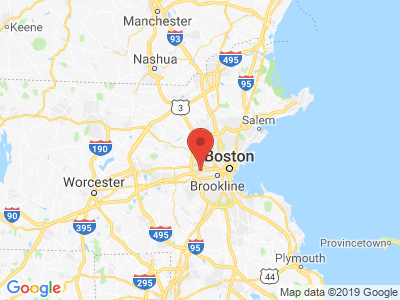
My office is located at 1075 Washington Street in West Newton. There is free street parking on either side of the street. I regret that this building is not handicap accessible and there are stairs to get into the building. Map

If you would like to schedule an appointment, you may reach me in the following ways:

Phone: (617) 943-2725

Email: Crileytherapy@gmail.com

TherapyPortal will be available for established patients to schedule appointments at their convenience.

image.png