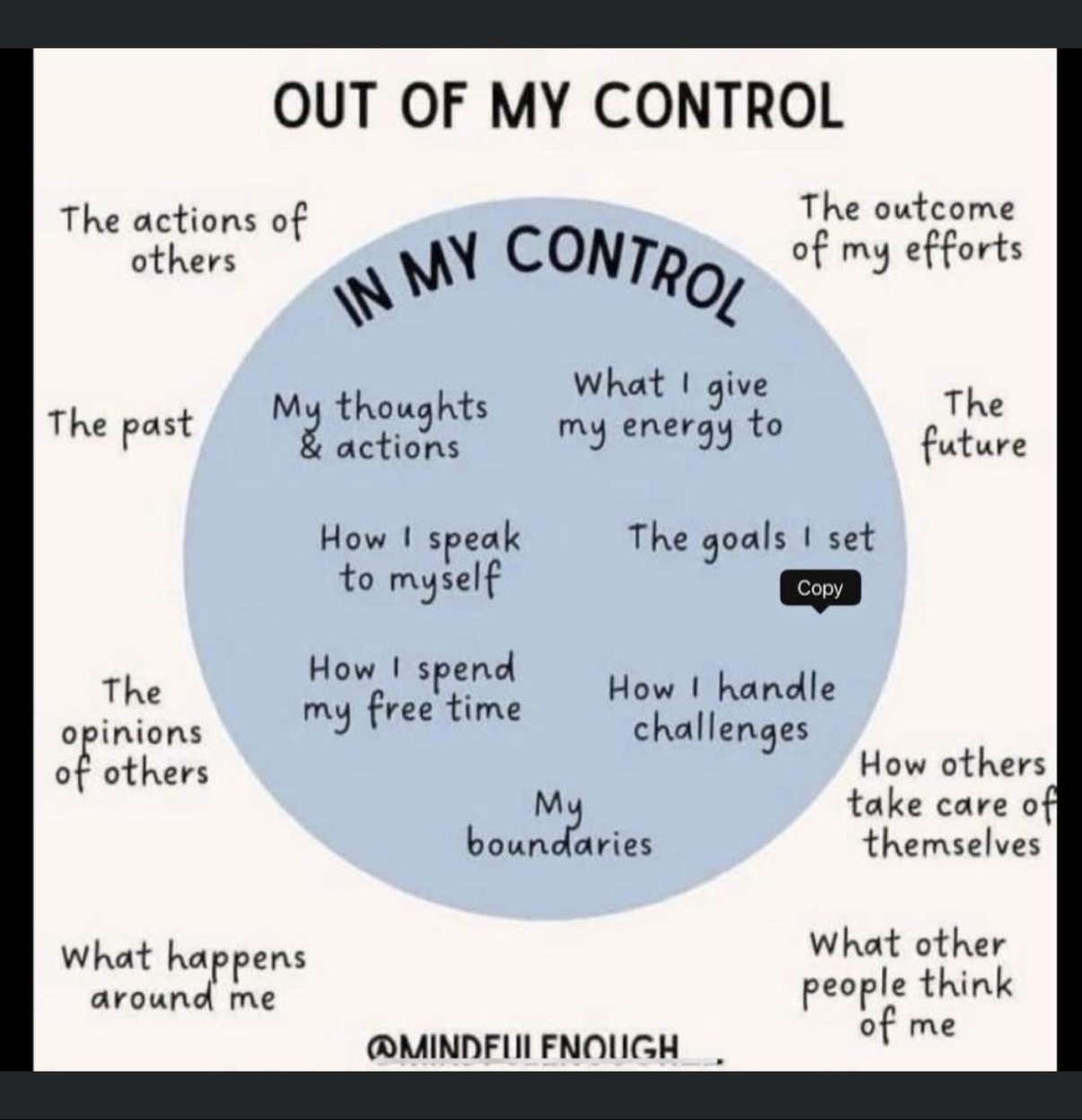
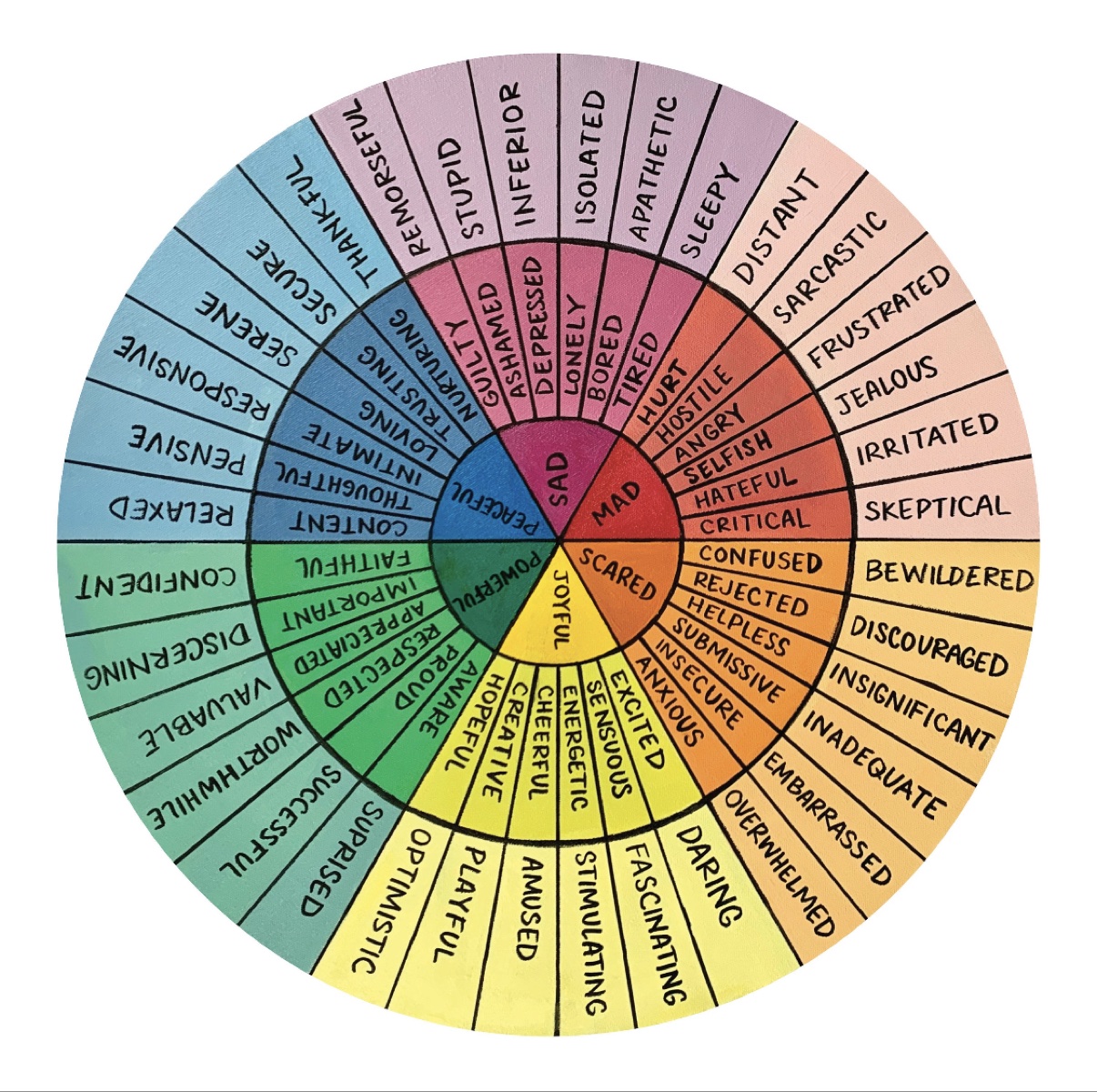
Blog

How Do You Recognize Fawning?

Everyday examples and healthier alternatives

SituationFawning responseHealthier alternative
Someone is angry with youImmediately apologize to make the anger stopConsider whether you actually did something wrong
Someone asks for a favorSay yes despite feeling overwhelmedCheck your capacity before agreeing
You disagree with someoneHide your opinion to preserve the relationshipExpress your perspective respectfully
Someone treats you poorlyExplain their behavior or blame yourselfAcknowledge the impact of their behavior
Someone is disappointed in youFeel responsible for fixing their feelingsAllow them to have their feelings
You need somethingMinimize your needs to avoid seeming difficultState your needs clearly

A helpful distinction: Not every act of accommodation is fawning. Compromise, generosity, and keeping the peace can be healthy. Consider whether you can freely choose these behaviors — or feel compelled by fear of rejection, conflict, punishment, or abandonment.

Credit: Dr. Ingrid Clayton, author of Fawning.

Mental Zen: Fawning

A book by Dr. Ingrid Clayton

Do you find yourself suppressing your own needs, feelings and emotions to appease others? Or perhaps you’ve even lost track of what your needs and preferences are. Asking yourself who am I?? I’m not talking about empathy, compassion and generosity. I’m talking about accommodative behavior in response to a fear of rejection, conflict, retaliation or abandonment.

If this resonates with you, this book might be of interest and help to you. In her book, clinical psychologist Ingrid Clayton describes fawning as a fourth trauma response alongside fight, flight, and freeze. Instead of confronting a threat, escaping it, or shutting down, a person attempts to manage the threat by becoming agreeable, helpful, likable, or indispensable.

Clayton’s central message is that these behaviors often began as ways to survive emotionally or physically unsafe situations. They are not necessarily signs of weakness or a character flaw. But a strategy that once protected you can become a pattern that limits your relationships, choices, and sense of identity.

The deepest message of Fawning is that you can be a caring person without making yourself responsible for everyone else’s comfort.

You don’t have to become less empathetic, less generous, or less loving. You need to develop the ability to remain connected to yourself while being connected to other people.

A useful question to carry away from the book is:

“Am I doing this because it reflects who I am and what I want—or because I’m afraid of what will happen if I don’t?”

That distinction is at the heart of learning to unfawn.

Ingrid Clayton, Psy.D., is the author of three books: Fawning, Believing Me: Healing from Narcissistic Abuse and Complex Trauma, and Recovering Spirituality: Achieving Emotional Sobriety in Your Spiritual Practice. She also maintains a private practice and contributes to Psychology Today articles.

Wishing you a zen week ahead.

Warmly, Claudine

Mental Zen: Eroticism and Responsibility

An article by Esther Perel

This piece is an article by Esther Perel. The article challenges us to explore the erotic. The topic of sexuality has come up in many sessions so I hope this article will be of interest to you. Some of you may cringe, some of you may be excited, some of you may want to skip this week’s article… Take a moment to notice what comes up for you as you read this article, or choose to avoid it. Try to challenge yourself about if/why you may feel avoidant, triggered, ashamed. I hope you can take time to reflect on these questions and practice self-care.

Eroticism as Self-Care

“We carry the responsibility of our desire. Why? Because desire is an expression of our free will. Nobody can force us to want. So if it is ours, then it is also our responsibility to activate it. Freedom always comes with responsibility. We can turn ourselves on and we can turn ourselves off. We can have thoughts that will instantly shut us down and thoughts that will keep us open to possibility and curiosity. We can enliven ourselves and we can numb ourselves. Eroticism blooms from the tension between excitation and inhibition and manifests in the things we say and do, by how we act, and by how we think. We tend to think of eroticism as a sexual state shared by two or more people, but really, it starts with the individual. And it requires practice.

What is Eroticism?

Eroticism isn’t sex; it’s sexuality transformed by the human imagination. It’s the thoughts, dreams, anticipation, unruly impulses, and even painful memories which make up our vast erotic landscapes. It’s energized by our entire human experience, layered with early childhood experiences of touch, play, or trauma, which later become cornerstones of our erotic life. We know that even things that give us the most pleasure can come from the most painful sources. Eroticism is not comfortable and neat. It unveils inner struggles, emotional tensions, a mix of excitement and anxiety.

How do we access it?

I often talk about how couples who are plagued by sexual boredom find themselves there because of a lack of vulnerability with their partners. They prioritize getting it done over exploring the hidden desires that turn them on. The same can be said for the individual. When we’re on our own, we mostly know what gets “the job” done. Porn. Toys. Intense focus on a specific sweet spot followed by a quick finish. But to truly experience the benefits of eroticism, it can’t be treated as a job. So why are we so quick to punch in and punch out? Are we afraid of what may happen when we slow down and really spend some quality time with ourselves?

Now more than ever, we are our own panopticons, experiencing social control from the inside. We measure and judge ourselves, at times experiencing our body as a prison rather than a chateau full of rooms to lingeringly explore. And if we struggle with being inside our bodies, why would we take the time to explore them? Or for that matter, how could we ever feel safe to invite anyone else in? I’m not talking just about penetration. I’m talking about entering our personhood, our dreams, who we are, our heart and soul. Many of us are so self-critical that we forget these internal wonders. Erotic self-care begins with diminishing our inner-critic and giving ourselves simply the permission to feel beautiful, to enjoy our own company, to be more compassionate and realistic with ourselves without vacillating between excess and repression. I’m thinking of the many people who have described using their fingers to swipe the multitude of possibilities—better kept fantasy than reality—when those same fingers could be used pleasuring themselves.

I turn myself off when…

Incorporating eroticism into a self-care plan is basically about loosening the noose of a highly-developed cultural mandate about self-control so that we may explore what brings vibrancy and vitality into our lives. Whether we seek to explore eroticism on our own or with a partner, it always starts at the source: our self. Drawing on the work of the late therapist, Gina Ogden, I like to ask patients to complete this sentence: “I turn myself off when…” The answers are endless. “I turn myself off when…I check email before bed; when I worry about the kids; when I stress about work or the state of my finances; when I overeat or don’t exercise; when I don’t take care of myself.” Notice that, in this list, there is very little that is specifically sexual. What turns us off are the things that sap the energy and liveliness out of us.

I turn myself on when…

The same is true in the reverse. When I ask people to complete the sentence, “I turn myself on when….” the answers usually have to do with taking time for self-care: going into nature; dancing; pampering; connecting to body and sensuality, nurturing. We turn ourselves on when we energize ourselves, when we are embodied and focused—not on any particular goal, such as having an orgasm, but on the present moment. Maybe it’s the sensation of a small square of dark chocolate melting on our tongue. Or the moment when, in the shower, we start noticing the hot water on the nape of the neck, underarm, and chest. There are so many parts of our bodies that we never think to wash, check, or touch.

Sometimes we ignore these parts of us because somewhere along the line, we began to shut them down. Maybe we were deeply wounded and don’t trust ourselves to open up again. Maybe we feel like we no longer deserve to be attractive because we no longer have the fit body or full head of hair we once had. Or perhaps illness has transformed us, confiscated our breasts, uterus, testicles or another part of us, that makes us feel unsexy or unattractive. Sometimes we are in mourning or feel guilty, as if we don’t deserve to be sensual or awakened because we’ve just lost somebody. Sometimes we’re just annoyed. From the stresses of the everyday, to resentments, to deeper wounds, there are a lot of reasons for people to feel out of touch with their erotic selves. Often, shutting down feels like the only thing we can control. Incorporating eroticism into our self-care plans can alter our relationship with control and transform our state of being.

It’s about being receptive, willing, open, and responsive.

These are very important verbs in the realm of the erotic. It’s not about saying yes or no to everything; it’s about a willing to be influenced, receptive, curious. When we’re shut down for a prolonged period of time, we don’t feel open or responsive. We want others to make us want but that doesn’t work so well, remember? Wanting is something that we fully own. No one can make us want except for ourselves.

Desire and self-worth go hand in hand. In order to want, we need to feel deserving, an idea Susan Rubin Suleiman explored in her book “The Female Body in Western Culture.” Sadly, way too often when we don’t feel attractive, we can’t imagine that somebody else sees us with different eyes than the way we see ourselves. And we certainly don’t feel like we deserve their sensual touch or our own, for that matter. This is one of the ways that self-rejection speaks. I want to encourage us to change the script: I deserve to take a break. I deserve to stop working. I deserve to lay down. I deserve to make myself feel good. In that healthy sense of entitlement, we don’t produce anything; there’s nothing to measure. It’s a radiant interlude, a decision to notice what we generally don’t pay attention to, to open ourselves up to receive and respond.

Widening the Realm of the Senses

When we widen the realm of the senses, we invite the world in. I love to ask people the following questions. Answer them for yourself:

  • What’s your favorite temperature of water?
  • What’s your favorite temperature generally outside?
  • How do you respond to sun, wind, air?
  • Are you aware of what touches your skin, of what hovers around you?
  • When you wash yourself, what’s your relationship to the body that you’re washing?
  • Do you enjoy touching yourself? And I’m not talking about genitals only, but pleasing and soothing yourself.
  • When you drink coffee or tea are you just gobbling or savoring?
  • Are you aware of your experiences in sensory, sensual, and physical ways?
  • Which is the sense with which you make love the most?
  • Which sense do you barely notice or use?

Incorporating Eroticism into Your Self-Care Plan

Self-care isn’t just about facemasks and mindfulness, though those are great, too. It’s about tuning into our bodies and letting them teach us what we like, what we don’t like, and what we don’t know about ourselves yet. There are so many ways to incorporate eroticism into our self-care plan, from integrating different types of touch—energetic, affectionate, sexual, and erotic—to exploring massage, stroking, tickling, and kinky playing. Try this: let your fingers roll from your elbow to your wrist in the absolute slowest way you can. Then go even slower.

For me personally, dancing has been my thing. We can cry when we paint, listen to music, read, or write, but we can’t cry when we dance. The body won’t let us; it can’t move while it weeps. For others, it may be the self-soothing that comes from self-massage, that simultaneous giving and receiving. Some of us find eroticism across multiple practices such as tantra and yoga. Being in our bodies is not about performance or results. It’s about coming home. It’s a pleasurable, sensual connection that reminds us that life is worth living even when we are in pain or struggling. If we want to be able to connect better with our bodies, we must invite ourselves to explore different experiences around our senses, and around our sensuality. Befriending our bodies and making peace with them is the beginning of one of the best relationships we can ever have: the relationship with ourselves.”

Esther Perel is a Belgian psychotherapist of Polish-Jewish descent who has explored the tension between the need for security and the need for freedom in human relationships.

Wishing you a zen week ahead.
Warmly, Claudine

Mental Zen: New Normal?

An article by Esther Perel and Mary Alice Miller

This week’s piece is an article by Esther Perel, with co-author, Mary Alice Miller. The article challenges us to “rebuild, reprioritize, and reconnect” whether it is with oneself, a partner, or their family and friends. We have all been aware of reopenings, but most are still quite cautious (and rightly so). The world has changed…but as Perel notes, maybe it’s not a bad thing. We have discussed this in sessions, but I like the list of questions she asks here and encourage you to explore these. I also like the way she ties this into exploring and re-evaluating the needs of your relationships. I hope you can take time to reflect on these questions and perhaps reprioritize.

Fear and loss, or possibility and progress?

“While many people are living by the moving needle of reopening dates, hoping “to return to normal,” many others are reaching a critical realization: we’re not going back.

And that’s not necessarily a bad thing. There were issues before, weren’t there? That version of life didn’t always feel great, did it? Many of us were in debt and depleted, if not financially, then spiritually. For the sake of future security, some of us were marching forward on a path that didn’t always align with our truest desires, and at times left us feeling more disconnected than ever. Now, with future security out the door, we’re realizing that the decisions we made were based on plans for a future that no longer exists.

The New Normal is here and it requires a new mindset—a curiosity about what we want for ourselves, with our partners and families, with our dates and friends, and with our work lives. For individuals and couples who were already experiencing distance and misalignment, this redefinition of normal life can be an opportunity to rebuild, reprioritize, reconnect, fantasize, and even let go of some of the things that were holding us back long before the pandemic.

What decisions does this new landscape require? What fantasies does it inspire? How do we talk about it? And how do we put those plans in action in a time when we’re either living with each other 24/7 like never before or living apart, in isolation, like never before?

Rebuilding Emotional Connections Requires Feeling it All

Nothing feels good about what we’ve lost—loved ones, jobs, human touch, safety, and the rites and rituals of graduations, birthday parties, weddings, and funerals which once served as life’s milestones. Misery is allowed, even encouraged. Feeling the contours of our grief has been paramount to confronting this surreal situation. The ambiguous loss, and other new pandemic-related emotions, run deep but they have a purpose. We’re in mourning for our old lives, our former sense of normalcy. But these emotions signal that a change has happened and that we must change with it. Talk to your closest people about what those changes are and what they feel like. Share stories of difficult transitions from your pasts; doing so helps us ground each other in reality and triggers the emotional muscle memory of times when we’ve had to be strong and resilient before.

As psychologist Susan David has explained so well, difficult emotions experienced in an appropriate, healthy amount are a sign that you actually accept reality. Only then can you begin to use your skills in order to become creative about how to respond to a crisis that demands innovation. If you deny this reality—if you keep waiting for life to return to the way it was—you will be at a disadvantage for being able to emotionally and mentally handle this crisis. Those who can come together around the idea that we’re not going back to what once was have the opportunity to get a headstart into what will be.

It may surprise you, but a great exercise to do with your loved ones, whether you are on top of each other or quarantined apart, is to complain your heart out. It’s a valve release for our feelings of loss and longing. Kvetching gives us a sense of control and camaraderie. Try it.

Staying Connected Now Means Balancing Fear and Hope

When you have complaints out of your system, you’re ready to look at what’s on the other side of these collective losses that have piled up—the reorientation and restoration, the accommodation of loss and the hope for the future. Julia Samuel describes the importance of reexamining our grief, what she calls “living losses,” with our hope. “Hope is more than a feeling,” she says. “It’s a plan.”

Take, for instance, the couple who have been dating long distance so they can prioritize their careers which happen to be in different cities. They thought it would be a year apart, tops, but it’s been several years now with no resolution of when and where they will live together again. Now, locked down in different cities, he can’t imagine living apart any longer. She, on the other hand, knows they’ve been avoiding a conversation about her crushing student loan debt and feels that their jobs still have to be the priority. Consider the couple who scheduled IVF treatments for June and now wonders if it’s safe to have the child they’ve always wanted when the world is in the throes of crisis. Or the man who, after a year of torturing himself with the difficult decision of whether to move his mother into a nursing home, signed the papers and began the process only for nursing homes to tragically become a high risk place for infection and death during the pandemic. He wonders now if she could come live with him and his partner, and if their relationship could survive it.

The Covid-19 pandemic, like so many crises, has acted as an accelerator for each of these situations, and there’s no easy solution. This is a moment in which the duality of fear and hope must be held with equanimity, thoughtfulness, and even humor and fantasy. It’s a time for laying the cards out on the table, and asking the following questions:

  • What do we really want?
  • Where do we want to be?
  • What do we want to build?
  • What’s a project we’d love to accomplish in the next year? 3 years? 5 years?
  • For whom are we responsible?
  • To whom do we want to live close?
  • What do we have going well for us?
  • What are our greatest challenges?
  • What do we have control over?
  • What do we have absolutely no control over?
  • Where do we need to fight?
  • What do we need to surrender?
  • What are our strengths and weaknesses individually and together?
  • If we could be anything, go anywhere, and be happy, what would that look like? It might even be just a slightly better, more aligned version of where you already are.

How Erotic Thinking Helps Emotional Connections

Believe it or not, these questions are erotic in their very nature. They are about imagination, fantasy, exploration, curiosity, and navigating the trauma of this moment for the sake of cultivating pleasure. We know that some of the greatest pleasure comes from the deepest pain. How will you take the losses of this moment and transform them into possibilities? Let’s look at the couple quarantining apart again.

They both need to answer the aforementioned set of questions individually before they can answer them together. Accessing their deepest desires, hopes, and fears in the context of our new normal may reveal new strategies for staying connected. She may present her student loan debt, in the context of our current economic uncertainty, as a reason for keeping her job exactly as it is and where it is. He may present his desire to be in the same place, and his lack of debt, as a reason for why he can be the one to relocate. Avoiding the conversation as a means of keeping the status quo—because the status quo feels like security—keeps them stuck in their pre-pandemic dilemma. But engaging in erotic thinking, submitting to their fantasies and desires, makes the challenging points loosen up. It breeds hope. Remember, hope is a feeling, but it’s also a plan.

And this isn’t only for couples who are physically quarantined apart. How many of us have felt the internal quarantine—the separateness from our loved ones we feel when we can’t get aligned? If you’ve been struggling with this, the world has made it very clear that now is the time to reexamine your priorities.

Reprioritize to Rebuild Emotional Connections

As counterintuitive as it may feel, from tragedy there can be opportunity. The loss of stability and security allows room for growth instead of staying put. The loss of plans is a chance to break patterns. It’s hard to see it this way, but doing so will help us navigate the New Normal. Even harder? Getting on the same page when no one—not even our leaders or greatest thinkers—seems to agree on the path ahead. We’ve spent our entire lives trying to control our forward motion only to now face a massive deviation that feels as if it’s forcing us sideways into the unknown. You can look at the unknown as a place of fear and loss. You can look at the unknown as a realm of possibility and progress. The reality is, it’s both.”

Esther Perel is a Belgian psychotherapist of Polish-Jewish descent who has explored the tension between the need for security and the need for freedom in human relationships.

Wishing you a zen week ahead.

Warmly, Claudine

Mental Zen: Discomfort, Grief, and Acceptance

An interview with David Kessler

This week’s piece is an interview Scott Berinato had with grief expert, David Kessler, on the similarities of coping with our current global situation and grief. This interview seemed a fitting topic which will likely resonate with many of you. I hope you can feel validated and incorporate some of the coping strategies.

That discomfort you’re feeling is grief…

“Kessler shared his thoughts on why it’s important to acknowledge the grief you may be feeling, how to manage it, and how he believes we will find meaning in it. The conversation is lightly edited for clarity.

People are feeling any number of things right now. Is it right to call some of what they’re feeling grief?

Kessler: Yes, and we’re feeling a number of different griefs. We feel the world has changed, and it has. We know this is temporary, but it doesn’t feel that way, and we realize things will be different. Just as going to the airport is forever different from how it was before 9/11, things will change and this is the point at which they changed. The loss of normalcy; the fear of economic toll; the loss of connection. This is hitting us and we’re grieving. Collectively. We are not used to this kind of collective grief in the air.

You said we’re feeling more than one kind of grief?

Yes, we’re also feeling anticipatory grief. Anticipatory grief is that feeling we get about what the future holds when we’re uncertain. Usually it centers on death. We feel it when someone gets a dire diagnosis or when we have the normal thought that we’ll lose a parent someday. Anticipatory grief is also more broadly imagined futures. There is a storm coming. There’s something bad out there. With a virus, this kind of grief is so confusing for people. Our primitive mind knows something bad is happening, but you can’t see it. This breaks our sense of safety. We’re feeling that loss of safety. I don’t think we’ve collectively lost our sense of general safety like this. Individually or as smaller groups, people have felt this. But all together, this is new. We are grieving on a micro and a macro level.

What can individuals do to manage all this grief?

Understanding the stages of grief is a start. But whenever I talk about the stages of grief, I have to remind people that the stages aren’t linear and may not happen in this order. It’s not a map but it provides some scaffolding for this unknown world. There’s denial, which we say a lot of early on: This virus won’t affect us. There’s anger: You’re making me stay home and taking away my activities. There’s bargaining: Okay, if I social distance for two weeks everything will be better, right? There’s sadness: I don’t know when this will end. And finally there’s acceptance. This is happening; I have to figure out how to proceed.

Acceptance, as you might imagine, is where the power lies. We find control in acceptance. I can wash my hands. I can keep a safe distance. I can learn how to work virtually.

When we’re feeling grief there’s that physical pain. And the racing mind. Are there techniques to deal with that to make it less intense?

Let’s go back to anticipatory grief. Unhealthy anticipatory grief is really anxiety, and that’s the feeling you’re talking about. Our mind begins to show us images. My parents getting sick. We see the worst scenarios. That’s our minds being protective. Our goal is not to ignore those images or to try to make them go away — your mind won’t let you do that and it can be painful to try and force it. The goal is to find balance in the things you’re thinking. If you feel the worst image taking shape, make yourself think of the best image. We all get a little sick and the world continues. Not everyone I love dies. Maybe no one does because we’re all taking the right steps. Neither scenario should be ignored but neither should dominate either.

Anticipatory grief is the mind going to the future and imagining the worst. To calm yourself, you want to come into the present. This will be familiar advice to anyone who has meditated or practiced mindfulness but people are always surprised at how prosaic this can be. You can name five things in the room. There’s a computer, a chair, a picture of the dog, an old rug, and a coffee mug. It’s that simple. Breathe. Realize that in the present moment, nothing you’ve anticipated has happened. In this moment, you’re okay. You have food. You are not sick. Use your senses and think about what they feel. The desk is hard. The blanket is soft. I can feel the breath coming into my nose. This really will work to dampen some of that pain.

You can also think about how to let go of what you can’t control. What your neighbor is doing is out of your control. What is in your control is staying six feet away from them and washing your hands. Focus on that.

Finally, it’s a good time to stock up on compassion. Everyone will have different levels of fear and grief and it manifests in different ways. A coworker got very snippy with me the other day and I thought, That’s not like this person; that’s how they’re dealing with this. I’m seeing their fear and anxiety. So be patient. Think about who someone usually is and not who they seem to be in this moment.

One particularly troubling aspect of this pandemic is the open-endedness of it.

This is a temporary state. It helps to say it. I worked for 10 years in the hospital system. I’ve been trained for situations like this. I’ve also studied the 1918 flu pandemic. The precautions we’re taking are the right ones. History tells us that. This is survivable. We will survive. This is a time to overprotect but not overreact.

And, I believe we will find meaning in it. I’ve been honored that Elisabeth Kubler-Ross’s family has given me permission to add a sixth stage to grief: Meaning. I had talked to Elisabeth quite a bit about what came after acceptance. I did not want to stop at acceptance when I experienced some personal grief. I wanted meaning in those darkest hours. And I do believe we find light in those times. Even now people are realizing they can connect through technology. They are not as remote as they thought. They are realizing they can use their phones for long conversations. They’re appreciating walks. I believe we will continue to find meaning now and when this is over.

What do you say to someone who’s read all this and is still feeling overwhelmed with grief?

Keep trying. There is something powerful about naming this as grief. It helps us feel what is inside of us. So many have told me in the past week, “I’m telling my coworkers I’m having a hard time,” or “I cried last night.” When you name it, you feel it and it moves through you. Emotions need motion. It’s important we acknowledge what we go through. One unfortunate byproduct of the self-help movement is we’re the first generation to have feelings about our feelings. We tell ourselves things like, I feel sad, but I shouldn’t feel that; other people have it worse. We can — we should — stop at the first feeling. I feel sad. Let me go for five minutes to feel sad. Your work is to feel your sadness and fear and anger whether or not someone else is feeling something. Fighting it doesn’t help because your body is producing the feeling. If we allow the feelings to happen, they’ll happen in an orderly way, and it empowers us. Then we’re not victims.

In an orderly way?

Yes. Sometimes we try not to feel what we’re feeling because we have this image of a “gang of feelings.” If I feel sad and let that in, it’ll never go away. The gang of bad feelings will overrun me. The truth is a feeling that moves through us. We feel it and it goes and then we go to the next feeling. There’s no gang out to get us. It’s absurd to think we shouldn’t feel grief right now. Let yourself feel the grief and keep going.”

David Kessler is the world’s foremost expert on grief. He co-wrote with Elisabeth Kubler-Ross On Grief and Grieving: Finding the Meaning of Grief through the Five Stages of Loss. His new book adds another stage to the process, Finding Meaning: The Sixth Stage of Grief. Kessler also has worked for a decade in a three-hospital system in Los Angeles. He served on their biohazards team. His volunteer work includes being an LAPD Specialist Reserve for traumatic events as well as having served on the Red Cross’s disaster services team. He is the founder of http://www.grief.com, which has over 5 million visits yearly from 167 countries.

Scott Berinato is a senior editor at Harvard Business Review and the author of Good Charts Workbook: Tips Tools, and Exercises for Making Better Data Visualizations and Good Charts: The HBR Guide to Making Smarter, More Persuasive Data Visualizations.

Wishing you a zen week ahead.

Warmly, Claudine

Mental Zen: The Certainty of Uncertainty

A piece by Dan Mager

I have heard the anxiety and concern about politics, racism/antisemetism/homophobia/xenophobia, civil unrest, and above all uncertainty about the future. It can be paralyzing and disruptive…or transformative and positive.

The following piece explains how it can be more of the latter. I hope this excerpt can be helpful as we move forward, and hopefully grow, with uncertainty.

“It’s no surprise that the stress and anxiety of the COVID-19 pandemic are having a significant effect on people’s mental, as well as physical health.

While COVID-19 and its related concerns are a new stressor, the past is all too present in the recent spate of horrific high profile murders of African Americans, including by law enforcement authorities, crystalizing awareness of the systemic racism that has been all too prevalent throughout US history. The continuous news reports of protests, initially littered with incidents of rioting/looting, and often heavy-handed law enforcement responses evoke widespread anger, sadness, frustration, and fear. In combination, the result for most people is a sinkhole of uncertainty.

Uncertainty occurs when the ground with which we’re familiar shifts, seemingly right beneath our feet, and things are in a state of flux where no one knows what will happen next or how things will play out, and what a “new normal” may look like when the dust settles. The human body is hardwired to respond to uncertainty in that as our brains are structured to assess potential threats/risks. In the face of uncertainty and unpredictability our nervous systems are on high alert, braced for reacting through fight, flight, or freeze.

Tragically, the polarization of positions related to both the coronavirus (fully reopening the economy vs. proceeding more slowly and cautiously) and the issues of racial equality and police brutality is pouring accelerant on this sense of uncertainty and intensifying the emotional intensity and anger. Social media and certain news outlets oversimplify the issues and amplify the loudest and angriest voices—further increasing the experience of “threat.”

Crisis creates opportunities

A crisis can be any event or series of events that create an unstable, threatening situation affecting an individual, family, group, community, or whole society. All crises share several defining characteristics that include: being unexpected, producing high levels of uncertainty, anxiety, and stress, and representing a threat (real or imagined) to those affected.

On a personal level, crisis is a state of psychological disequilibrium (imbalance) that occurs when extraordinary events trigger extreme stress, challenge our perceptions of life-as-we-know-it, and throw us into turmoil. Because crises disrupt what is familiar and in turn comfortable, these shifting sands also create rare and meaningful opportunities for growth and change. Such opportunities may never have existed before, at least not in the conscious awareness of those caught in crisis. But the stress and uncertainty of the situation can cloud our ability to see and utilize the opportunities that emerge.

Often, the difference between despair and hope reside in a change of perspective. The 1st principle of Buddhist psychology is that all phenomena are impermanent and constantly changing, yet we tend to relate to them as though they are or should be permanent. This discrepancy is a source of considerable mental and emotional suffering. As a result, the first and most essential step toward becoming more comfortable with uncertainty and more skillful in dealing with it is to understand and begin to accept that as much as we’d like it to be otherwise, virtually nothing is certain. Just as the only true constant in life is change, the only real certainty is uncertainty.

Learning how to live with uncertainty and the various forms of discomfort that come with it creates and strengthens resiliency (the ability to adapt to change). It’s also a fundamental aspect of becoming an emotionally and developmentally healthy adult.

Daily actions to help you become more comfortable with uncertainty:

  • Practice kindness and compassion whenever possible (and it’s almost always possible)—toward yourself as well as others.
  • Hydrate/drink water—many people simply don’t drink enough water and are frequently in a state of mild dehydration that exacerbates stress and anxiety.
  • Be aware of your breathing and breathe intentionally, making your breathing slower and deeper—under the influence of stress, anxiety, and uncertainty breathing tends to become more rapid and shallow (in preparation for fight, flight, or freeze) which only increases stress and anxiety.
  • Reach out to someone by phone or video chat, if in-person contact isn’t an option—a friend or family member—who will listen with presence and emotional availability (and be present and emotionally available with them).
  • Engage in some movement of physical movement (movement is the body’s internal lubricant), ideally one that elevates your heart rate for at least several minutes.
  • Re-animate your core values—bring to conscious awareness the values most important to you.
  • Do at least one thing that aligns with your core values—something you can genuinely feel good about.
  • If possible, be of service and do something meaningful (however small) for someone in need or less fortunate.

It’s so beneficial to consciously acknowledge your sense of uncertainty, even to “greet” it (“Ok, I’m experiencing a sense of uncertainty”), along with the feelings of stress, anxiety, and anger that may accompany it. Observe your sense of uncertainty and those feelings. Allow and make space for them. Hold that space and be present so that you can sit with and begin to make peace with them. And when you practice this, notice what happens and how your experience shifts.”

Dan Mager, MSW is a Buddhist Psychology practitioner and the author of Some Assembly Required: A Balanced Approach to Recovery from Addiction and Chronic Pain and Roots and Wings: Mindful Parenting in Recovery

Wishing you a zen week ahead.

Warmly, Claudine

Mental Zen: Finding Hope

A piece by many inspiring voices.

Sometimes it is difficult to not have a heavy heart after the events of inhumanity transpiring across the country, across the world. It is exasperating and discouraging to see how poorly humans can treat each other. I have read articles about the psychology of racism and why humans are hard-wired to be wary of anyone different from themselves as a means of survival.

This article notes that we as humans must evolve past this neanderthal way of thinking if we are to survive and thrive moving forward since exclusion and racism will be a downfall of humanity. It was an interesting article (https://www.bbc.com/future/article/20200403-how-to-overcome-racism-and-tribalism), but not the encouragement like I was hoping to offer.

Many are left wondering about how we move forward, feeling powerless in this ever-changing world. Sometimes it is helpful to look at history and the voices that have made a difference in civic consciousness for inspiration and guidance. The following quotes validate and hopefully encourage you to find solace, find your voice, and empower you during uncertain and evolving times.

I hope you are able to find hope from the words of these inspiring people…

“Ignorance and prejudice are the handmaidens of propaganda. Our mission, therefore, is to confront ignorance with knowledge, bigotry with tolerance, and isolation with the outstretched hand of generosity. Racism can, will, and must be defeated.” — Kofi Annan

“No human race is superior; no religious faith is inferior. All collective judgments are wrong. Only racists make them” — Elie Wiesel

“You are growing into consciousness, and my wish for you is that you feel no need to constrict yourself to make other people comfortable.” — Ta-Nehisi Coates, Between the World and Me

“Whoever debases others is debasing himself.” — James Baldwin, The Fire Next Time

“When we think of racism we think of Governor Wallace of Alabama blocking the schoolhouse door; we think of water hoses, lynchings, racial epithets, and “whites only” signs. These images make it easy to forget that many wonderful, goodhearted white people who were generous to others, respectful of their neighbors, and even kind to their black maids, gardeners, or shoe shiners–and wished them well–nevertheless went to the polls and voted for racial segregation… Our understanding of racism is therefore shaped by the most extreme expressions of individual bigotry, not by the way in which it functions naturally, almost invisibly (and sometimes with genuinely benign intent), when it is embedded in the structure of a social system.” — Michelle Alexander, The New Jim Crow: Mass Incarceration in the Age of Colorblindness

“I always looked upon the acts of racist exclusion, or insult, as pitiable, for the other person. I never absorbed that. I always thought that there was something deficient about such people.” — Toni Morrison

“We must accept finite disappointment, but never lose infinite hope.” – Martin Luther King Jr

“Hope is being able to see that there is light despite all of the darkness.” – Desmond Tutu

“I don’t think of all the misery, but of the beauty that still remains.” – Anne Frank

“However bad life may seem, there is always something you can do and succeed at. Where there’s life, there’s hope.” – Stephen Hawking

“When you feel like giving up, remember why you held on for so long in the first place.” – Paulo Coelho

“Never give up. No matter what is happening, no matter what is going on around you, never give up.” – 14th Dalai Lama

Wishing you a zen week ahead.

Warmly, Claudine

Mental Zen: Life is in the Transitions

A piece by Bruce Feiler

Today’s piece by Bruce Feiler addresses the many twists and turns in life and how it can often be the impetus for positive growth. Often, it is not a fast or easily solved obstacle, but nevertheless, it is thanks to the obstacle that we are able to forge a new, more meaningful path. Perhaps you can stop and take a look around in your life to see if there are other paths you can explore during this time

I hope you enjoy this excerpt…

“There is no single way to go through a life transition. Just as life is nonlinear, transitions themselves are nonlinear. While this lack of a blueprint can sometimes feel overwhelming, the good news of experiencing transitions—or living life in general—out of order is that we’re freed from the shackles of expectation, whether they come from our parents, our neighbors, or ourselves. We can make our own choices and decide what brings us peace.

Transitions take longer than we think, but not longer than we need—and not forever, either.

William James said it best a century ago: Life is in the transitions. We can’t ignore these central times of life; we can’t wish or will them away. We have to accept them, name them, mark them, share them, and eventually convert them into fuel for remaking our life stories.

The Italians have a wonderful expression for times of upheaval: lupus in fabula. The fabula is the fairy tale of our lives; the lupus is the wolf that keeps showing up. Lupus in fabula means “the wolf in the fairy tale.” Italians use it as the equivalent of speak of the devil. Just when life is going swimmingly, a wolf, an ogre, a dragon, a diagnosis, a downsizing, a death appears. That, of course, is what happened to all of us at one time or another. We come face to face with a wolf and have no idea what to do. And that’s OK. Because if you banish the wolf, you banish the hero. And if there’s one thing I learned it’s that we all need to be the hero of our own story. That’s why we need fairy tales. They teach us how to slay our fears and help us sleep at night. Which is why we keep telling them year after year, bedtime after bedtime. They turn our nightmares into dreams.”

– Bruce Feiler is the author of Life Is in the Transitions: Mastering Change at Any Age, from which this piece is adapted.

Wishing you a zen week ahead.

Warmly, Claudine